One principle guides every one of our locations: use what is already there. Existing building infrastructure, renewable energy on site, state-of-the-art cooling. What this all has to do with Europe's digital sovereignty, you can find out here.
Watch the videoSovereignty, Speed and Sustainability are the three benchmarks by which we measure every project. Sovereign, because our infrastructure is fully governed by EU law. Fast, because we use existing building structures instead of building new ones. Sustainable, because precisely this approach above all saves land, power and water.

Sovereign AI compute for Europe. We are a German company operating fully under EU law — no access via the US Cloud Act.
We are faster than the competition thanks to existing infrastructure. Our AI Hub MUC went successfully online within three months.
We use existing infrastructure and local green power, cooling without unnecessary water or energy consumption.
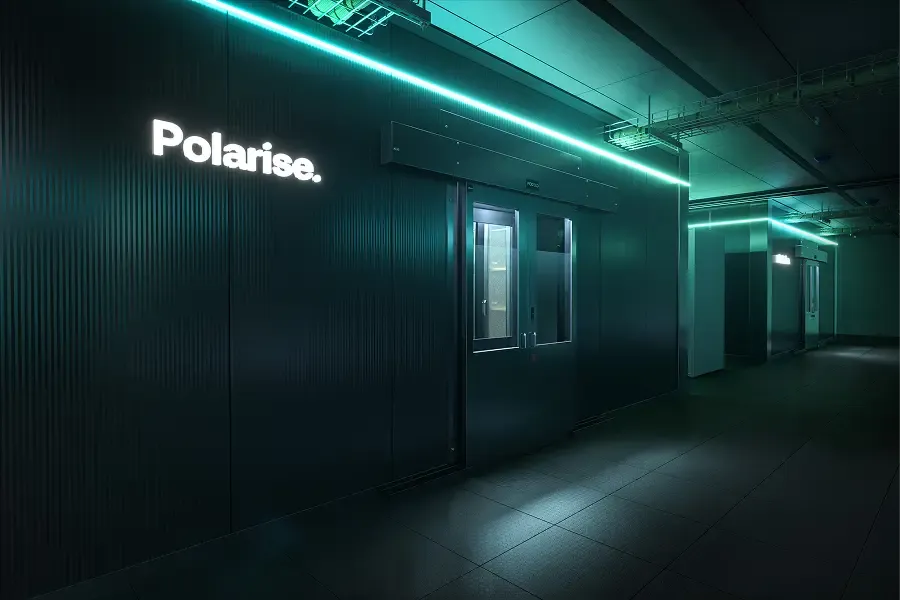
The simplest way to save land is not to consume any new land. Polarise follows the brownfield approach: existing and unused infrastructure is converted into a state-of-the-art data center. In Munich, an underground existing building in the Tucherpark was reactivated instead of building new.
A sustainable data center needs clean power, not just efficient cooling. In Amberg (Unterallgäu), a large photovoltaic system with around 70 megawatt-peak (MWp) is already in place and a battery storage system through our commitment. We cover the rest of the electricity demand with the purchase of green electricity from the grid. In Oslo, Polarise generates part of its electricity directly on the roof with a purpose-built 2.7 MWp solar installation. The rest comes from 100% hydropower. The goal is always to integrate an originating renewable energy source to promote and incentivize the expansion of regenerative energy.
Polarise cools individual pods in a targeted way, saving significant amounts of energy.
Each pod is its own room, separated from the rest of the data center.
Significantly below what classic room cooling achieves.

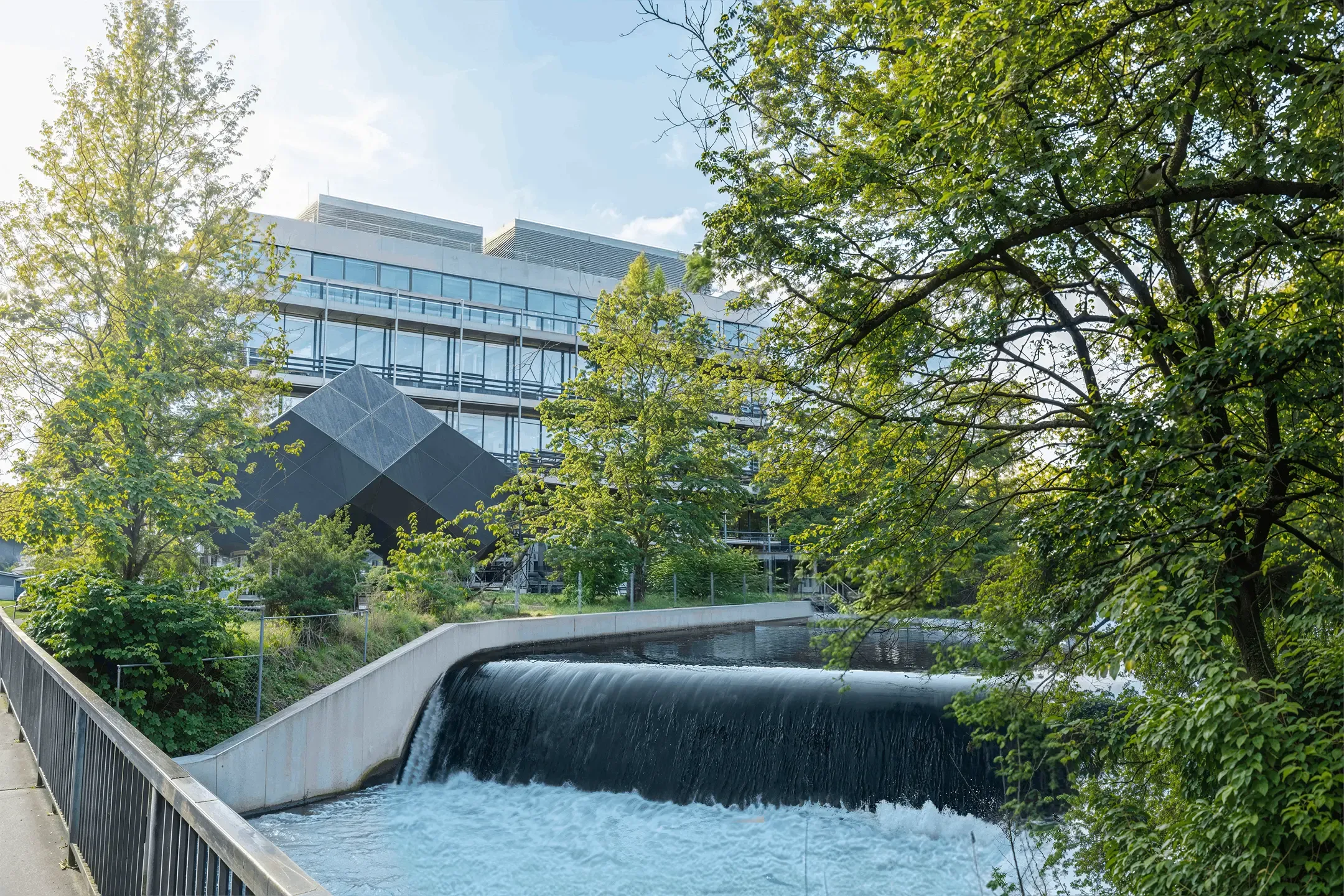
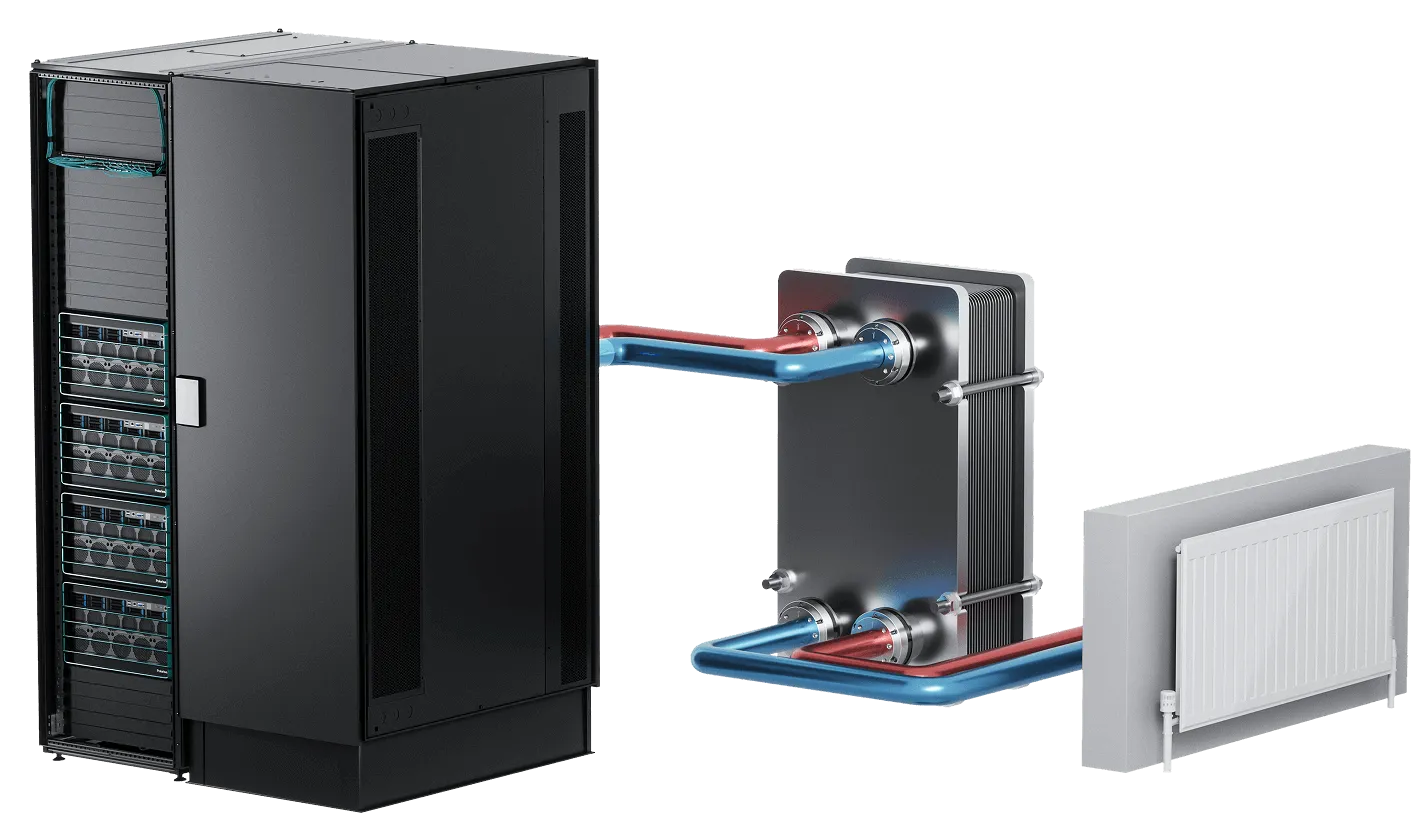
At its Munich location, Polarise addresses the issue of water consumption in a particularly sustainable way by using water from the Eisbach for cooling via a heat exchanger. The river water itself never comes into contact with the equipment; it merely cools the data center’s closed-loop cooling system and then flows back into the Eisbach. It does not evaporate; it is used only briefly and returned in the same condition. We use similar closed-loop systems at all our other locations.
Water cools the pods via a heat exchanger and flows back into the river without evaporating.
The water is fed back in the same quality it was extracted in.

Heat that is generated as a by-product does not have to be blown into the air senselessly. We are committed to consistently integrating waste heat reuse at our locations and are actively driving its expansion. At the Munich site, Polarise will use the waste heat to heat the surrounding residential and office buildings of the Tucherpark district. At the Oslo site, the nearby Gardermoen Airport is heated with waste heat, replacing the previous pellet combustion. This turns pure consumers into true suppliers.


CEO
Statkraft Varme
We are a German company, certified according to ISO/IEC 27001, ISO/IEC 9001 and EN 50600, and offer the complete stack from a single source, from the building to the cloud. The “Three S” are part of every decision we make — and that is exactly what sets us apart.